Friday, 17 October 2014

Buddhism and Eastern Asceticism Compared to Orthodox Christian Asceticism

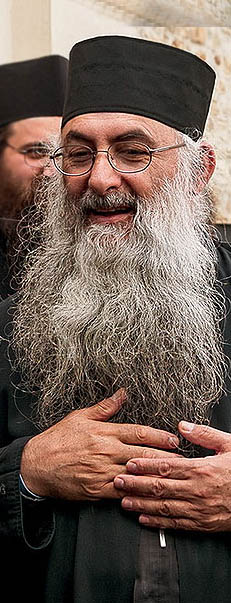
(Archimandrite Zacharias of Essex)

It is unfortunate that there is widespread confusion, not to mention delusion, in the inexperienced, whereby the Jesus Prayer is thought to be equivalent to yoga in Buddhism, or 'transcendental meditation', and other such Eastern exotica. Any similarity, however, is mostly external, and any inner convergence does not rise beyond the natural 'anatomy' of the human soul. The fundamental difference between Christianity and other beliefs and practices lies in the fact that the Jesus Prayer is based on the revelation of the One true living and personal God as Holy Trinity No other path admits any possibility of a living relationship between God and the person who prays. 

“My Acquaintance with Elder Sophrony”

Metropolitan of Diocleia, Kallistos (Ware) speaks for Elder's Sophrony spirituality and his personal acquaintance with him

The mystery of man’s heart

Very Rev. Archimandrite Zacharias (Zacharou)


All the ordinances of the undefiled Church are offered to the world for the sole purpose of dis­covering the ‘deep heart’,[1] the centre of man’s hypo­s­tasis. According to the Holy Scriptures, God has fashioned every heart in a special way, and each heart is His goal, a place wherein He desires to abide that He may mani­fest Himself.

Since the kingdom of God is within us,[2] the heart is the battlefield of our salvation, and all ascetic effort is aimed at cleansing it of all filthiness, and preserving it pure before the Lord. ‘Keep thy heart with all diligence; for out of it are the issues of life’, exhorts Solomon, the wise king of Israel.[3] These paths of life pass through man’s heart, and therefore the unquenchable desire of all who ceaselessly seek the Face of the living God is that their heart, once deadened by sin, may be rekindled by His grace.

The heart is the true ‘temple’ of man’s meeting with the Lord. Man’s heart ‘seeketh knowledge’[4] both intellectual and divine, and knows no rest until the Lord of glory comes and abides therein. On His part God, Who is ‘a jealous God’,[5] will not settle for a mere portion of the heart. In the Old Testament we hear His voice crying out, ‘My son, give Me thy heart’;[6] and in the New Testament He commands: ‘Thou shalt love the Lord thy God with all thy heart, and with all thy soul, and with all thy mind, and with all thy strength.’[7] He is the one Who has fashioned the heart of every man in a unique and unrepeatable way, though no heart can contain Him fully because ‘God is greater than our heart’.[8] Nevertheless, when man succeeds in turning his whole heart to God, then God Himself begets it by the incorruptible seed of His word, seals it with His wondrous Name and makes it shine with His perpetual and charis­matic presence. He makes it a temple of His Divinity, a temple not made by hands, able to reflect His ‘shape’ and to hearken unto His ‘voice’ and ‘bear’ His Name.[9] In a word, man then fulfils the purpose of his life, the reason for his coming into the transient existence of this world.

Thursday, 9 October 2014

Is there spiritual life and sanctity today?

By Archimandrite Kyrillos, Abbot of the Holy Monastery of Essex 

My immediate answer to both parts of this question is a very affirmative ‘Yes’. God does not change. Jesus Christ is the same, yesterday, today, and for ever. And the nature of human beings has not changed either. Since Adam, humans are dignified with such a power over their own destiny that they can to a great degree turn their backs on God, on spiritual life, on the quest for holiness. But until the end of the world, there will always be people who, even if they are in the minority, will call down God’s grace upon the earth and their fellow humans. That the world continues is proof that there is holiness today. Saint Silouan said, ‘I tell you that when there are no more men of prayer on earth, the world will come to an end.’

Saturday, 27 September 2014

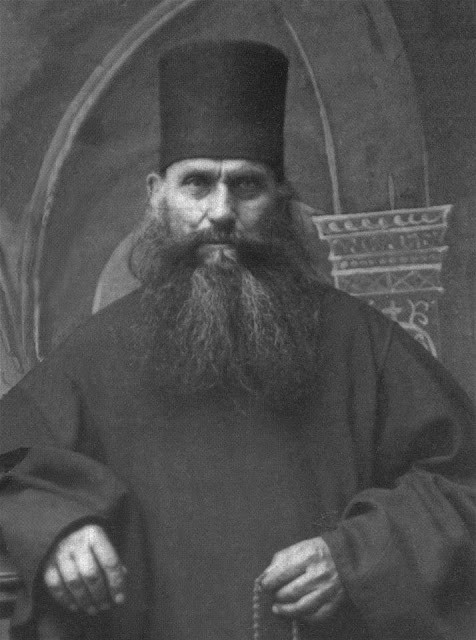
St. Silouan of Mt. Athos: “I have many sorrows of my own, and they are my own fault…”

Roman Savchuk

St. Silouan of Mt. AthosEveryone in life has his own battle of Stalingrad, his own cross, his own Golgotha. There are moments when it seems that circumstances are indeed beyond our power, when life breaks down and it’s painful even to look at the world around us. In such moments the soul is tormented by one question: “Why?” Reason refuses to accept reality and it languishes in bewilderment and supposition, tearing the wounded heart into pieces. Reality is cruel, and the soul can truly become sick. And no one knows when sorrows will knock at doors of the heart. But we must know in that moment how to answer these unawaited guests…

Wednesday, 7 May 2014

Поуке старца Софронија

Старац Софроније је говорио да човек не може да живи хришћански, већ може само хришћански да умре. Ако је Христос за нас пример, онда видимо да се живот задобија преко крста – из гроба и смрти. Преко крста и смрти, ми задобијамо живот испуњавајући заповести. Заповести обнављају човека, распињу у њему старог човека и васкрсавају новог. Држање заповести обнавља у нама новог човека по слици и подобију nашег Твроца – Бога.