Thursday, 24 September 2015

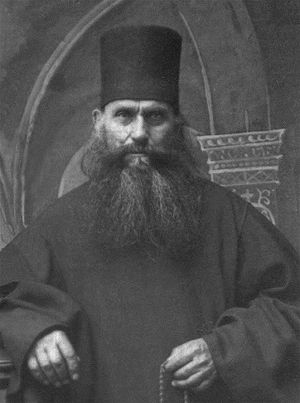
ST. SILOUAN OF MT. ATHOS: “I HAVE MANY SORROWS OF MY OWN, AND THEY ARE MY OWN FAULT…”

Roman Savchuk

St. Silouan of Mt. AthosEveryone in life has his own battle of Stalingrad, his own cross, his own Golgotha. There are moments when it seems that circumstances are indeed beyond our power, when life breaks down and it’s painful even to look at the world around us. In such moments the soul is tormented by one question: “Why?” Reason refuses to accept reality and it languishes in bewilderment and supposition, tearing the wounded heart into pieces. Reality is cruel, and the soul can truly become sick. And no one knows when sorrows will knock at doors of the heart. But we must know in that moment how to answer these unawaited guests…

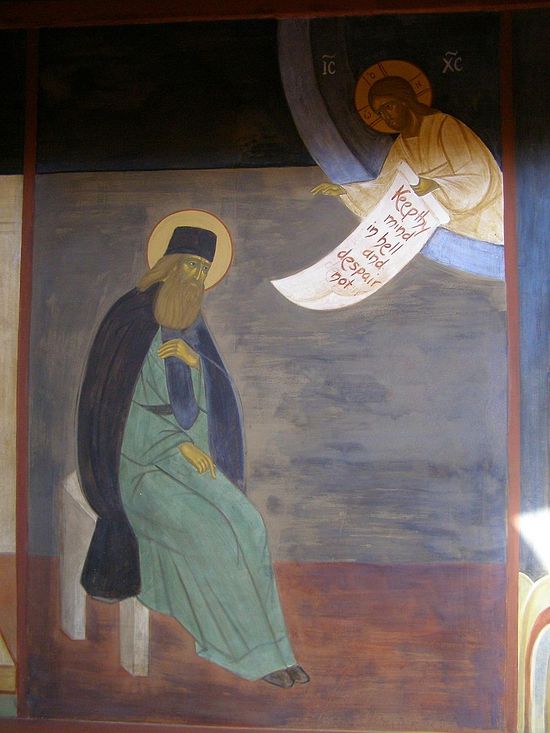
ON THE WORD TO ST. SILOUAN, “KEEP THY MIND IN HELL AND DESPAIR NOT”

Jesse Dominick

The now famous saying, “keep thy mind in Hell and despair not,” is a word given by God to St. Silouan one night as he struggled intensely with demons. Six months after going to the Holy Mountain St. Silouan was blessed to experience a vision of Christ in glory, in which he experienced the full Christ, and the life of Christ. Eventually he felt this grace subsiding and so he dedicated himself to extreme ascetical struggles in hopes of attracting the grace of God again. One night, fifteen years later, mentally and spiritually exhausted, St. Silouan wanted simply to bow before Christ in His holy icon, but a terrible demon stood in his way, and he heard from God in his heart, “The proud always suffer from demons.” When he asked God how to defeat pride he heard again in his heart, “Keep thy mind in Hell and despair not.” From that point on he practiced this and humbled himself to the extreme, and he became so acquainted with the practice that he could go there with but a movement of his soul. Fr. Sophrony[1]says that ultimately this state is impossible to describe—one can only really know it by experience. Even amongst those who have experienced it, St. Silouan’s experience is unique in that even his body experienced the fires of Hell, as it was a charismatic gift from God which corresponded perfectly to his state.

Wednesday, 9 September 2015

http://pemptousia.com/video/fr-zacharias-requirements-and-practice-of-the-divine-liturgy/

The purpose of the Christian life is for our intellect to be united with our heart

zacharias-zaharou-wolVery Rev. Archimandrite Zacharias (Zacharou)

The purpose of the Christian life is for our intellect to be united with our heart, because then we’re cured.

We’re made whole and we can turn to God with our whole being, fulfilling His commandments in a manner well-pleasing to Him.

> Elder Zacharias of Essex <

Sunday, 3 May 2015

Jelousy

Elder Sophrony of Essex

One of the signs of egotism is the presence of some feeling of jealousy within us.

We must avoid this feeling as if it were black death itself.

The genuine Christian life liberates us from jealousy.

A Conversation with the Elder Sophrony

The abbot of the Great and Holy Monastery of Vatopedi, Archimandrite Ephraim, spoke with Elder Sophrony of blessed memory at the Holy Monastery of St. John the Baptist in Essex, England on 20 September 1992.

From this meeting, one is struck by Elder Sophrony’s spirituality and ascetic vision, and can appreciate the value of his contribution to the contemporary life of the Church.

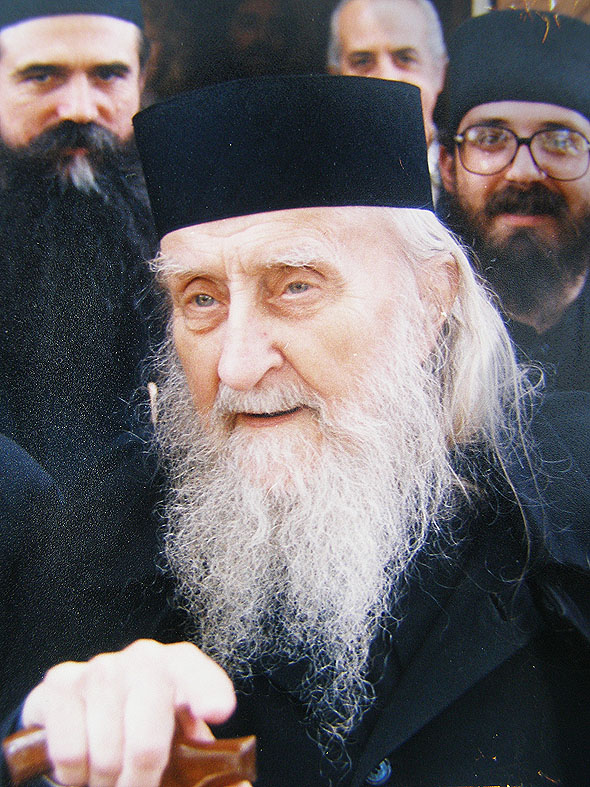
The abbot of the Great and Holy Monastery of Vatopaidi, Archimandrite Ephraim, in the garden of the Monastery of St. John the Baptist in Essex (1992) with Elder Sophrony, among the many pilgrims who found spiritual comfort near the venerable Elder